Introduction
Dubai remains one of the most active rental markets in the UAE, and many residents now choose shared accommodation because private apartments can be expensive in central locations. For workers, students, new expats, freelancers, and people saving for family expenses, Shared Rooms in Dubai can offer a practical way to live near metro stations, business districts, malls, and daily services without paying a full apartment rent.
In 2026, the shared rental market is still strong, but tenants need to be more careful than before. Listings on major portals show a wide price range, from low cost bed spaces in older or outer communities to higher priced partitions and private rooms near metro stations or premium districts. At the same time, Dubai has increased attention on overcrowding, unsafe partitioning, and unapproved shared housing, so price should never be the only deciding factor. Recent reporting has highlighted stronger enforcement around overcrowded and unsafe shared housing in Dubai.
This guide explains realistic prices, popular areas, room types, transport factors, safety checks, and practical tips for finding Shared Rooms in Dubai in 2026.
1. 🏙️ Dubai Shared Housing Market in 2026
The main reason people search for Shared Rooms in Dubai is affordability. Dubai rents have stayed under pressure because demand remains high, and reports for 2026 suggest rent growth is still expected, though at a more moderate pace than the sharp increases seen in earlier years.
For Shared Rooms in Dubai, current marketplace listings show that shared housing is not one fixed product. It includes a single bed in a room, a partitioned space inside a larger apartment, a private room with shared bathroom, a master room with attached bathroom, and sometimes a couple room. Each option has a different price, privacy level, and legal risk depending on the building rules and landlord approval.
For 2026, tenants should treat Shared Rooms in Dubai as a proper housing decision, not just a quick monthly payment. A cheaper place can become expensive if it has poor hygiene, illegal partitioning, hidden utility charges, no written agreement, or transport costs that add up every day.
2. 💰 Expected 2026 Price Range
Prices for Shared Rooms in Dubai vary by area, building quality, metro access, gender preference, furnishing, utilities, and number of people in the flat. Based on active listing patterns, basic bed spaces in affordable communities can appear from around AED 500 to AED 1,200 per month, while better bed spaces near metro areas often move closer to AED 900 to AED 1,600 per month. Partition rooms usually range from around AED 1,300 to AED 2,800 per month, depending on privacy and location. Private rooms can range from about AED 2,500 to AED 4,500 per month, while master rooms in stronger locations can be higher.
For example, International City listings show bed spaces advertised from around AED 500 to AED 1,300 monthly, with some private rooms closer to AED 2,900 to AED 3,500. Al Barsha listings show bed spaces and partitions from under AED 1,000 to around AED 2,800, while private rooms often appear around AED 3,400 to AED 4,000 or more. These are listing examples, not guaranteed final rents, so tenants should inspect and compare carefully.
When checking Shared Rooms in Dubai, always ask whether DEWA, cooling, internet, gas, cleaning, and maintenance are included. A room that looks cheaper may cost more after monthly bills.
3. 📍 Best Affordable Areas to Consider
The most practical areas for Shared Rooms in Dubai are usually places with older apartment buildings, strong public transport, supermarkets, laundry shops, restaurants, and easy access to job centers. Deira remains popular because it is central, connected by metro, and close to traditional markets and business activity. Bur Dubai is another common choice for people who want central access and older buildings with many shared options.
International City is one of the strongest budget choices because monthly bed spaces can be lower than many central districts. Al Nahda and Al Qusais are also common for residents who work between Dubai and Sharjah, especially people who want lower rents and family friendly surroundings. Dubai Silicon Oasis and Dubai Investment Park may suit people working nearby, though commute planning is important.
Bayut highlights areas such as International City, Al Nahda, Deira, Al Qusais, and Mirdif as budget friendly choices for renters looking for lower housing costs. For people choosing Shared Rooms in Dubai, these areas are useful starting points, but the exact building and flat condition matter more than the area name alone.
4. 🚇 Best Areas Near Metro and Daily Transport
Transport can change the real value of Shared Rooms in Dubai. A cheaper bed space far from public transport may not save money if you spend extra on taxis or long bus routes. Metro connected areas such as Deira, Bur Dubai, Al Rigga, Union, Salah Al Din, BurJuman, Karama, Al Barsha 1, Dubai Internet City surroundings, and Discovery Gardens can be very attractive for daily commuters.
For Shared Rooms in Dubai, near metro areas usually cost more because demand is higher. Al Barsha 1 near Mall of the Emirates is popular for retail, hospitality, office, and service workers because the metro, buses, supermarkets, and restaurants are close. Bur Dubai and Deira remain practical for people who need fast access to older commercial zones, hotels, clinics, and trading businesses.
Before booking Shared Rooms in Dubai, test the commute on Google Maps during your actual work timing. A room that is 20 minutes away at noon may become a difficult trip during morning or evening peak hours.
5. 🛏️ Room Types and What You Actually Get
With Shared Rooms in Dubai, not every listing means the same thing. A bed space means you usually rent one bed in a shared room, sometimes with four to eight people in the same room. It is the cheapest option, but it offers the least privacy. A partition room gives more personal space, but it may not always be properly approved. A private room gives better privacy and may suit couples or people working from home. A master room offers attached bathroom access and is usually the highest priced shared option.
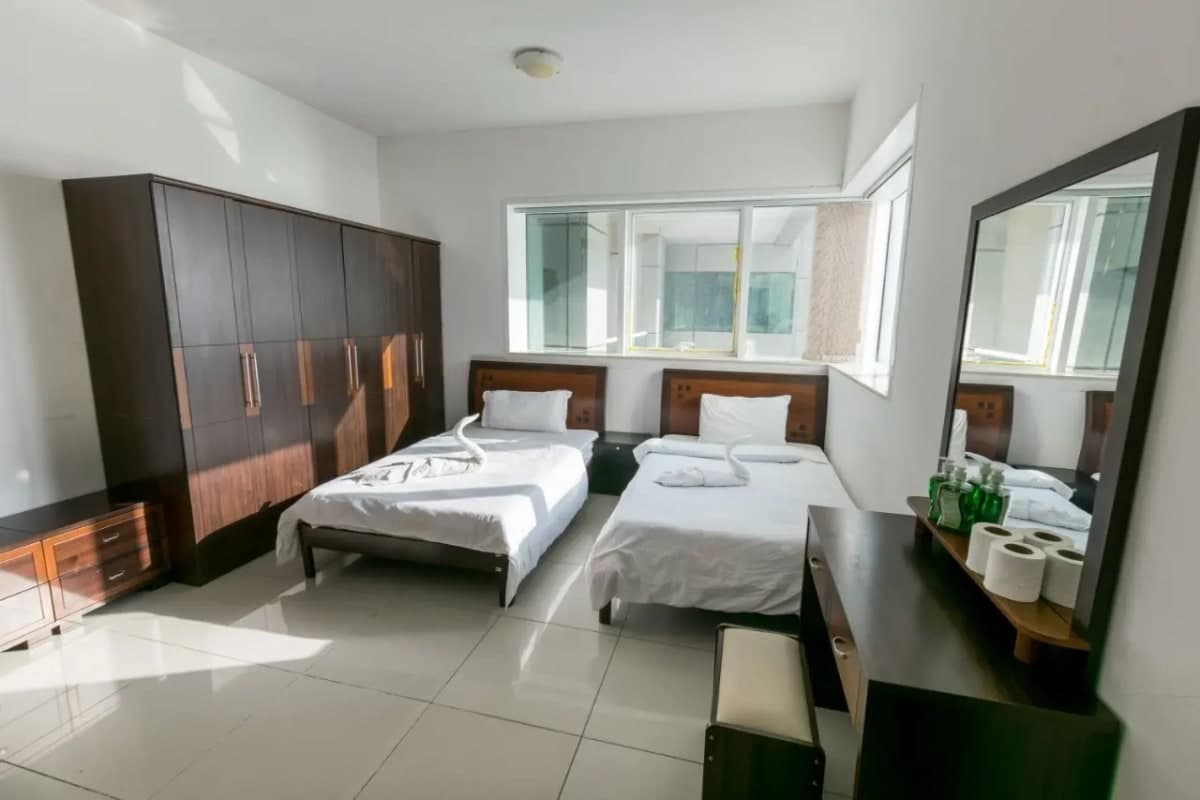
Many Shared Rooms in Dubai are fully furnished, but furnished can mean different things. Some include bed, mattress, cupboard, washing machine, cooking access, WiFi, and cleaning. Others include only basic furniture. Always ask for clear pictures and visit in person before paying any deposit.
Also check the number of people sharing the bathroom and kitchen. Two bathrooms for six people may be manageable. One bathroom for twelve people can create daily stress and hygiene problems.
6. ⚖️ Legal and Safety Checks Before Paying
In 2026, legal and safety checks are very important for Shared Rooms in Dubai. Dubai authorities have been cracking down on overcrowded and unsafe shared apartments, especially illegal partitions and unsafe living setups. News reports have also highlighted that penalties can be serious for non compliant shared housing, and tenants may face sudden eviction if the unit is not approved.
Before paying, ask whether the landlord or main tenant is allowed to sublet. Request a written agreement with rent amount, deposit, notice period, included bills, refund policy, and house rules. Check whether the building allows sharing and whether the number of occupants is reasonable. Avoid flats with blocked exits, unsafe electrical extensions, wooden partitions near cooking areas, poor ventilation, or too many people in one unit.
Safe Shared Rooms in Dubai should have working smoke alarms where applicable, clean common areas, proper locks, visible maintenance standards, and a clear contact person for repairs.
7. ✅ Smart Checklist for Choosing the Right Room
Use a simple checklist before choosing Shared Rooms in Dubai. First, confirm the total monthly cost. Second, visit the room at night and during busy hours if possible. Third, check metro or bus distance by walking, not only by map estimate. Fourth, ask how many people live in the flat. Fifth, confirm whether guests are allowed and whether there are quiet hours. Sixth, check WiFi speed if you work online. Seventh, review bathroom, kitchen, fridge space, washing machine, water pressure, and air conditioning.
Take pictures of the room condition before moving in. Pay through a traceable method when possible and collect a receipt. Do not hand over passport originals. A fair deposit is normal, but the refund condition should be written clearly.
For women seeking Shared Rooms in Dubai, it is also important to check building security, flatmates, entrance lighting, transport after late shifts, and whether the room is ladies only or mixed accommodation.
8. 📈 2026 Outlook and Final Renting Tips
The 2026 outlook suggests that Shared Rooms in Dubai will remain in demand because many residents still need flexible and affordable monthly housing. Dubai continues to attract workers, entrepreneurs, students, and visitors who become long stay residents, so shared accommodation will remain part of the city’s housing reality.
However, the best renters will be more selective. Instead of choosing only the lowest price, compare location, legality, hygiene, flatmate count, commute time, utility inclusion, and management quality. International City may be strong for budget savings. Deira and Bur Dubai may be better for central access. Al Barsha may suit metro users and Mall of the Emirates area workers. Al Nahda and Al Qusais may suit people balancing Dubai work with Sharjah access.
The smartest approach is to shortlist several Shared Rooms in Dubai, visit each one, compare the full monthly cost, and choose the place that gives the best balance of safety, comfort, and commute.
Conclusion
Shared Rooms in Dubai can be a smart and positive housing solution in 2026 when chosen carefully. Prices can start from budget bed spaces around AED 500 to AED 1,200 in affordable areas, while partitions, private rooms, and master rooms cost more depending on location and comfort. The best areas include Deira, Bur Dubai, International City, Al Nahda, Al Qusais, Al Barsha, Karama, and other communities with good transport and daily services.
For Shared Rooms in Dubai, the key is to avoid unsafe, overcrowded, or unclear arrangements. Check the room in person, confirm included bills, ask about legal permission, review flatmate count, and keep written proof of payments. With the right checks, Shared Rooms in Dubai can help residents live closer to work, control monthly expenses, and settle into Dubai with more confidence in 2026.